
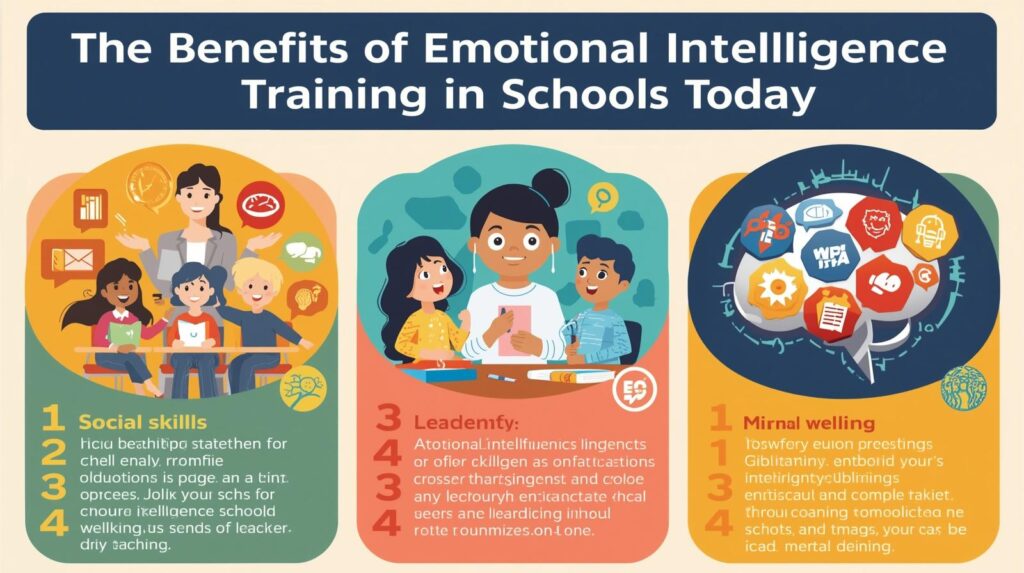
Understanding the Role of Emotional Intelligence in Education
In modern education, emotional intelligence (EI) has emerged as an equally important skill set alongside academic knowledge. Emotional intelligence refers to the ability to recognize, understand, and manage one’s emotions while also being able to empathize and interact effectively with others. Schools have traditionally focused on intellectual growth, but in today’s complex world, students need both academic intelligence and emotional intelligence to succeed. Integrating EI training into the school curriculum ensures that young learners are equipped with the tools necessary to handle stress, build relationships, and adapt to challenges.
Why Emotional Intelligence Matters for Students
Students who develop emotional intelligence early on are better prepared to face both personal and academic challenges. Research shows that children with higher EI demonstrate improved communication skills, stronger empathy, and healthier coping mechanisms. These abilities reduce anxiety, enhance focus in the classroom, and improve overall mental well-being. Moreover, emotionally intelligent students are more resilient and capable of dealing with setbacks, which helps them maintain motivation and achieve long-term success.
Key Benefits of Including Emotional Intelligence Training in Schools
- Improved Academic Performance – Students who manage stress and emotions effectively are more focused and perform better academically.
- Stronger Social Skills – EI training fosters empathy and cooperation, which leads to healthier friendships and teamwork.
- Better Mental Health – Teaching self-awareness and self-regulation reduces anxiety, depression, and behavioral issues.
- Conflict Resolution Skills – Students learn to manage disagreements constructively, reducing bullying and violence in schools.
- Preparation for Future Careers – Employers increasingly value emotional intelligence as highly as technical skills, making EI an asset for professional growth.
How Emotional Intelligence Can Be Taught in Schools
Emotional intelligence training can be integrated into daily classroom activities through structured programs and teacher-led initiatives. Simple practices such as mindfulness exercises, group discussions, and reflective writing help students understand and regulate their emotions. Role-playing and collaborative projects also teach empathy and conflict resolution. Schools can introduce dedicated workshops that focus on self-awareness, emotional regulation, and social interaction, ensuring that students learn to handle real-life challenges effectively.
Challenges and the Way Forward
One challenge in adopting EI training is the lack of trained educators who can effectively teach these skills. Another barrier is the traditional emphasis on standardized testing, which often sidelines emotional development. However, with growing awareness, educational policymakers and institutions are beginning to realize that emotional intelligence is not a “soft skill” but a critical life skill. By investing in teacher training and adjusting curricula, schools can strike a balance between academic achievement and emotional growth.
Conclusion: Building a Holistic Education System
Emotional intelligence training is no longer optional; it is essential for preparing students to thrive in an unpredictable and competitive world. By including EI in the curriculum, schools can foster well-rounded individuals who are not only academically capable but also emotionally strong, socially responsible, and mentally resilient. Education must move beyond textbooks and exams to nurture the emotional well-being of students, ensuring they grow into balanced and empathetic human beings.
